


Insights from Shanghai: Innovations in Children’s Library Services and Beyond
In April 2025, I had the opportunity to participate in the Shanghai Community Library’s Children’s Librarian Training Programme, together with a colleague from the National Library Board (NLB). In addition to sharing NLB’s children’s services and Mother Tongue Language programmes with our Shanghai counterparts, the programme offered rich learning experiences through visits to several libraries known for their innovative approaches to modern librarianship, particularly in children’s services. These are the Shanghai Children’s Library (Changfeng Branch) (上海少年儿童图书馆 (长风馆), Shanghai Library East (上海图书馆 (东馆), Zikawei Library (徐汇区图书馆 (徐家汇书院), (江宁路街道图书馆), and ’s (中山学校) school library.
Expanding Access Through Strategic Service Points
The Children’s Services across the public libraries in Shanghai recorded an overall increase of 36.5% in children’s book loans in 2023 as compared to 2019, surpassing 15 million loans in total. Their success stems from a comprehensive approach that extends library services beyond traditional boundaries.
Their “Child-Friendly Reading Initiative” created 157 new reading spaces in various locations such as shopping centres, parks, and residential areas, thus embedding reading opportunities into the fabric of daily life. The initiative recognises that children and families prefer to access library services wherever they naturally congregate, and not just where libraries traditionally exist.
The “Mibao Cloud Study Room” service exemplifies how digital innovation can complement physical expansion. Launched in 2024, this online book ordering system and home delivery service generated more than 170,000 loans and attracted over 25,000 users within its first year of service. By removing traditional barriers of distance and time, the service makes library resources readily accessible to families. Its success relies heavily on China’s robust delivery infrastructure and the deeply ingrained “外卖” (delivery) culture, where consumers are accustomed to having everything from meals to groceries delivered to their doorsteps. By embedding the book delivery service into their daily routines, the initiative reshapes how families access and engage with reading materials.
This multi-pronged approach to accessibility offers valuable insights into how libraries can extend their reach beyond their physical space, particularly in Singapore’s dense urban environment where space is limited and families lead increasingly busy lives.
Design That Speaks to Young Users
The Shanghai Children’s Library (Changfeng Branch) epitomises how thoughtful architectural design can enhance the library experiences across different age groups.
Its four-storey building is organised into distinct zones for Early Learners, Kids, and Teens, recognising the varying developmental needs of children as they grow. Highlights include a STEM exploration area that encourages hands-on learning, a broadcasting room where children can create audio recordings to develop both technical skills and creative expression, and a shadow puppet theatre that blends traditional storytelling with interactive play, offering a meaningful cultural learning experience.
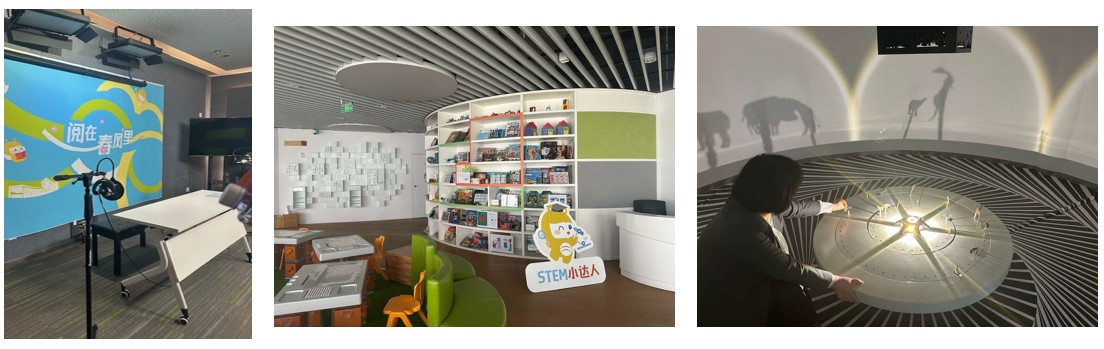
Figure 1. Dedicated STEM spaces and recording facilities. From Left: recording room for recording of storytelling by children and parents, STEM exploration area, and a shadow puppet theatre.
The building’s design makes full use of its riverside setting, featuring high-ceiling spaces that can accommodate large group activities and an outdoor patio that seamlessly connects indoor learning with nature.
Their cohesive branding around the bee mascot “Mibao” creates a strong and recognisable identity that permeates every aspect of the visitor experience. From library materials and wall decals to a dedicated gift shop selling Mibao merchandise, the mascot serves as both a wayfinding tool and an emotional touchpoint for visitors.
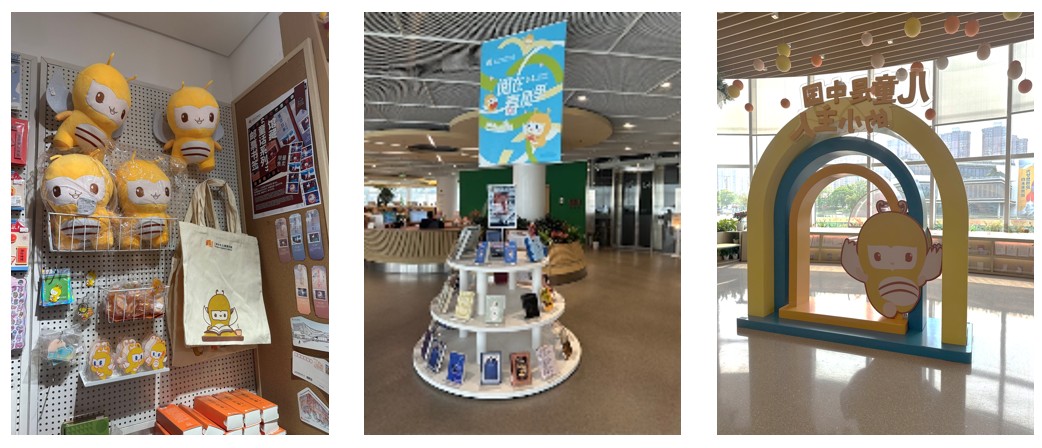
Figure 2. Strong branding of “Mibao” mascot at Children’s Library. Mibao appears on souvenirs, posters, and water vending machines.
Technology Enhancing User Experience Across All Ages
The integration of smart technologies across Shanghai’s libraries, namely Shanghai Library East and Zikawei Library, demonstrates how digital tools can enhance rather than replace human interaction in library services.
This is evident in Shanghai Library East’s user-centric design which thoughtfully caters to both children and adults. One of the library’s standout feature is the “World We Live In” visual classification guide which transforms the traditionally complex book classification system into an intuitive and child-friendly navigation tool. By using visual cues and age-appropriate language, young users can browse independently, hence fostering the development of early information literacy skills.
Another notable initiative is the children’s self-service reading device loan system. With a generous 56-day borrowing period and compatible books conveniently placed nearby, the system encourages sustained engagement with digital reading and supports the gradual development of digital literacy.
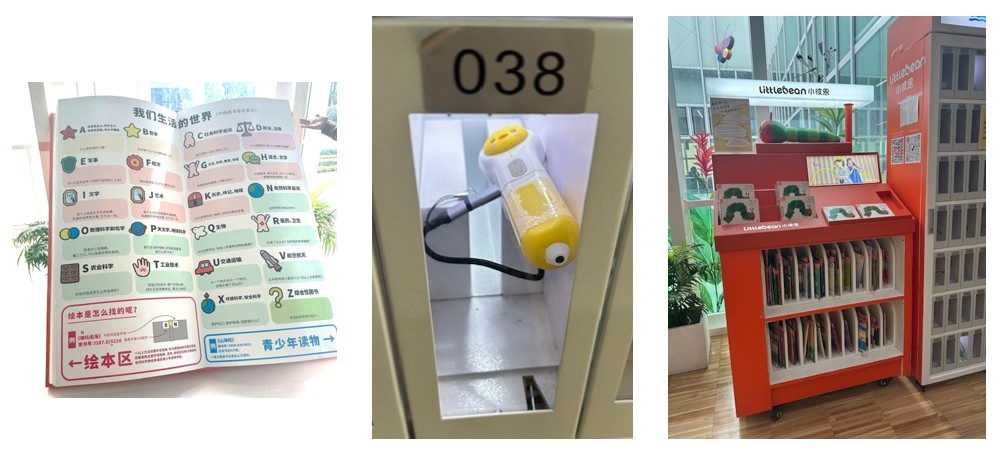
Figure 3. Left: Chinese Library Classification – “World We Live In” (我们生活的世界); Centre and Right: Smart services – children’s self-service reading device loan system.
At the Zikawei Library, smart technology is used to enhance both transparency and visitor engagement. A real-time dashboard at the entrance displays visitor analytics and reading trends, showcasing the library’s vibrancy while offering insights into usage patterns. It also serves as a natural conversation starter for staff when engaging with curious patrons. Complementing this is a virtual ambassador that guides visitors through the space, providing a consistent stream of information while freeing staff to focus on more personalised and complex interactions.
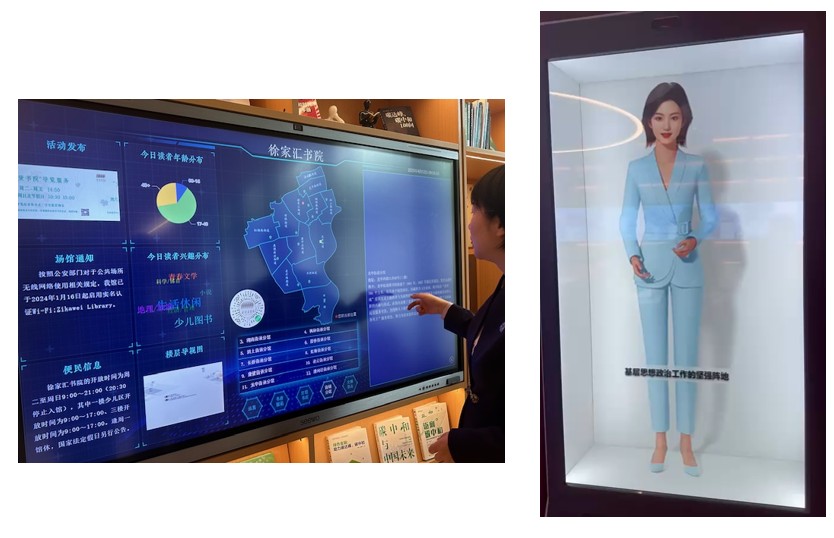
Figure 4. Digital integration at the library. Left: Entrance dashboards display real-time visitor statistics; Right: Xu Xiaoxuan(徐小宣), a virtual ambassador who provides comprehensive information through a visualized data platform.
Creative Communication and Behaviour Management
The Zikawei Library’s approach to patron communication exhibits a thoughtful and nuanced approach by recognising how language shapes experiences across all user groups. Instead of relying on prohibitive signages, they reimagined library rules into poetic expressions that encourage good behaviours while fostering a welcoming atmosphere.
In the children’s area, the gentle reminder of “No frolicking, no hurried footsteps—immerse yourself in peaceful reading and learning” conveys the same message as “No running”, thereby reframing expectations by highlighting the joys of calm and focus, rather than prohibiting unwanted actions.
For adult patrons, messages such as “Shh—let the scent of books soothe your restless journey” acknowledges the stresses of modern life and positions the library as a sanctuary. This empathetic approach recognises that library users bring external pressures with them and positions library behaviour expectations as a form of self-care rather than restriction.
Separately, the Shanghai Library East’s approach to managing programme attendance through a – a temporary suspension from registering for library programmes after the third no-show, offers an alternative way of addressing the challenge of programme attrition while maintaining fairness to others.
Inclusive Programming and Accessibility
The Shanghai East Library’s holistic approach to accessibility left a strong impression with its integration of assistive technology and meaningful programming to support patrons with special needs across all age groups. Their inclusive facilities extend beyond basic compliance to create genuinely welcoming spaces for visually impaired patrons.
The availability of Braille writing tools, Braille printers, Braille Lego sets, and specially configured computers enables independent learning and creative expression among the visually-impaired, reinforcing the library’s role as a place of participation and possibility rather than simple information access.
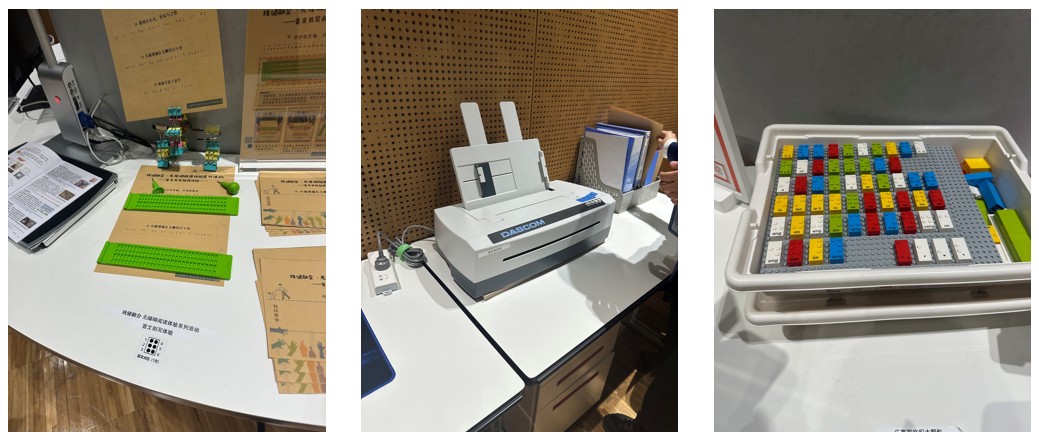
Figure 5. From Left: Braille writing tools, Braille printer, and Braille LEGO sets.
Programmes such as computer classes, mobile phone tutorials, and accessible movie nights reflect an understanding that digital literacy and social connection are as important as traditional library services for patrons with special needs. This holistic approach effectively combines assistive technology with practical skill-building opportunities and social engagement.
The thoughtful branding of inclusive services as “童享阳光” (Sharing Sunshine Among Children) at the Shanghai Children’s Library demonstrates how positive messaging can reduce stigma while clearly identifying specialised services. This approach offers valuable insights into how we may develop and promote our own inclusive programming at our libraries in Singapore.
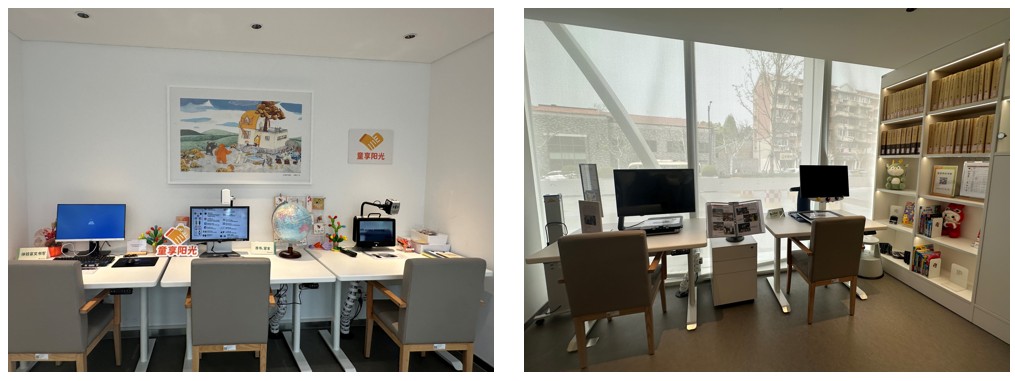
Figure 6. Dedicated spaces for inclusive facilities and programming for children with special needs, thoughtfully branded as “童享阳光” (Sharing Sunshine Among Children).
Community Integration and Personalised Service
The Jiangning Road Subdistrict Library exemplifies how libraries can become vibrant community hubs when meaningfully integrated into broader social infrastructure. Housed within a multi-purpose community centre, it serves a wide range of users including children, the elderly, and individuals with autism, demonstrating inclusive service delivery in practice.
The community centre itself functions as a cultural hub, hosting performances, local produce markets, and even ad-hoc childcare services. This integrated model recognises that community needs extend beyond book borrowing, encompassing social connection, cultural engagement, and practical support services.
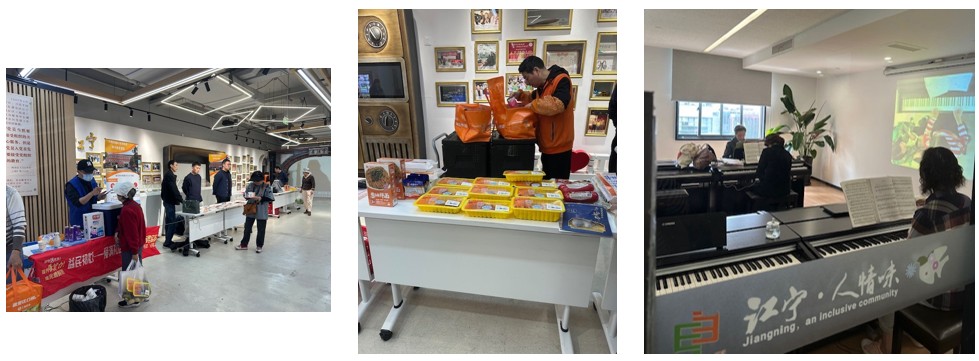
Figure 7. The Jiangning Road Subdistrict Library is located within a community centre, which functions as a cultural hub hosting performances, local produce market and activities like piano lessons for seniors.
Their approach to collection curation offers valuable insights into collaborative service delivery. Instead of competing with neighbouring libraries, the administrator curates a selection that complements nearby collections. By featuring popular titles for young readers alongside high-quality non-fiction for adults, each library in the network offers something special while avoiding unnecessary duplication.
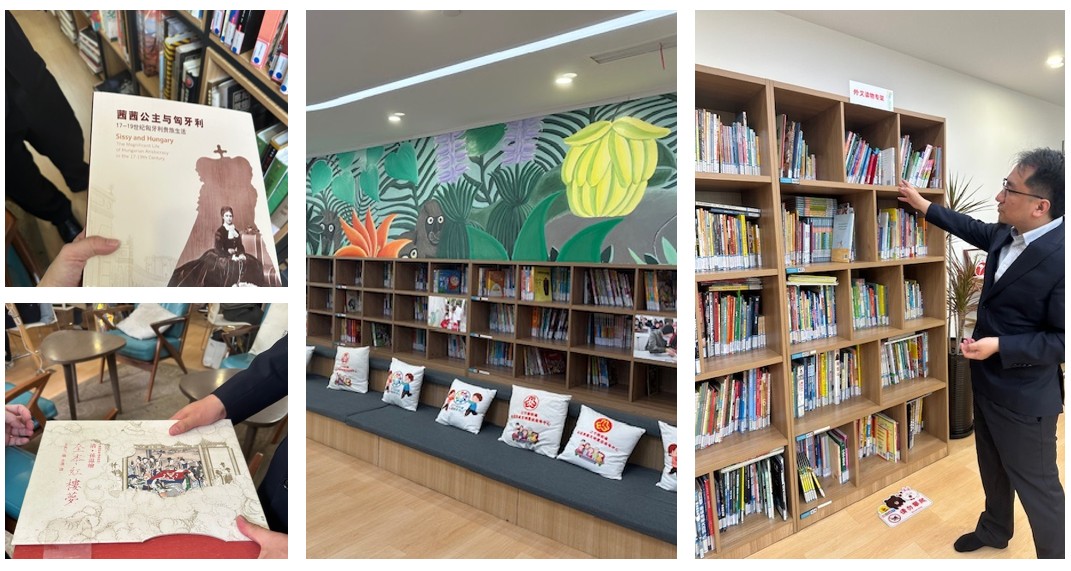
Figure 8. The Jiangning Road Subdistrict Library curates a selection that includes popular titles for young readers and high-quality non-fiction for adults.
The library’s highly personalised services delivered through WeChat groups demonstrate how technology can facilitate rather than replace human connection. Through these platforms, staff share reading recommendations, answer queries, and maintain ongoing relationships with regular users, creating a sense of community.
Their close partnerships with local schools and the district education department further highlight the library’s role as an educational connector. By drawing on local heritage, these collaborations offer immersive learning experiences that help children engage meaningfully with the history and places within their own community.
Educational Partnerships and Integrated Learning Environments
Our visit to Zhongshan School revealed innovative approaches to creating holistic learning environments that extend beyond traditional library boundaries. With primary and secondary students sharing the same campus, the school library serves as a central hub, featuring age-appropriate sections with tailored designs—lower shelves for younger students and spacious study areas for older students. The designs reflect an awareness that physical design must accommodate developmental differences.
The school’s commitment to creating diverse learning opportunities is evident across the entire campus. In addition to the school library, students benefit from specialised learning spaces including a Chinese medicine corner developed in partnership with a local hospital. This collaboration exemplifies how educational institutions can enrich learning by connecting students with real-world applications and professional expertise.
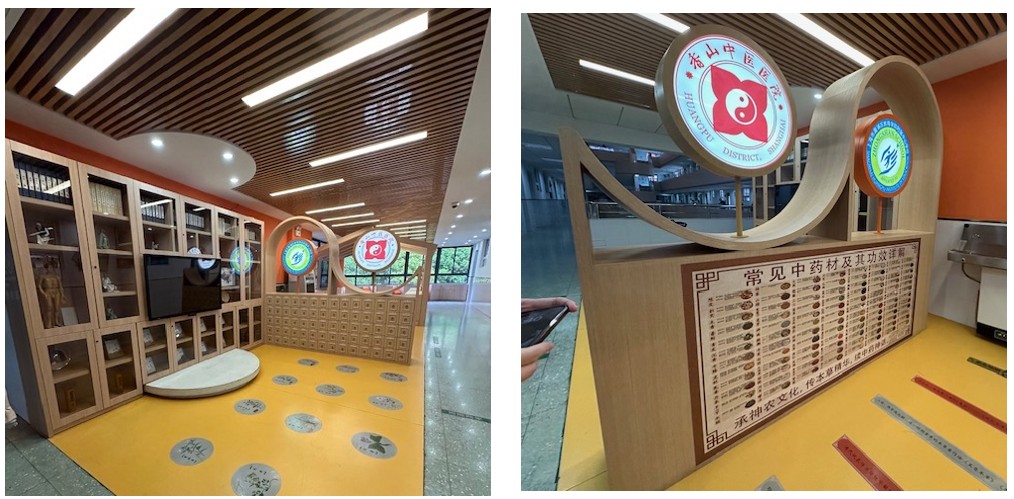
Figure 9. Chinese medicine corner at Zhongshan School developed in partnership with a local hospital.
The school’s commitment to holistic education is evident in its wide range of over 50 extracurricular activities, supported by specialised facilities like pottery studios and on-campus broadcasting studios. Initiatives like their Young Reporter programme provides students with practical journalism experience, demonstrating how schools can foster both traditional literacy and contemporary communication skills through dedicated spaces and equipment.
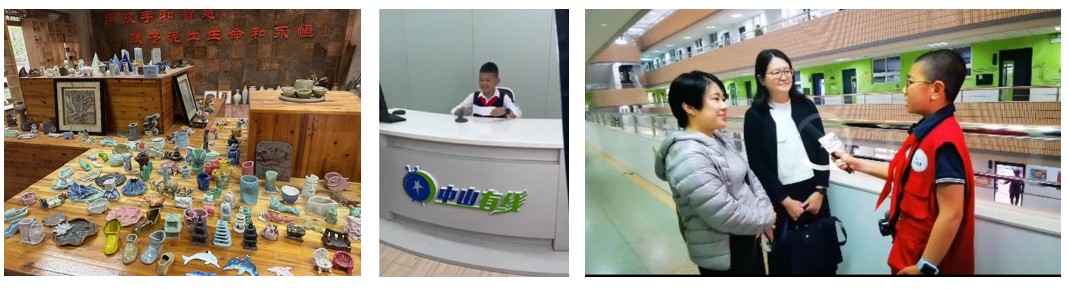
Figure 10. Left: Pottery Studio for pottery lessons and a space to showcase students’ creative pottery creations; Middle and Right: Zhongshan School’s broadcasting studio and their Young Reporter programme provide students with practical journalism experience.
Conclusion & Looking Forward: Implementing Our Learning
Our Shanghai experience reinforced that successful library services—particularly for children and families—require a multi-faceted approach combining strategic expansion, thoughtful spatial design, integration of smart technologies, strong community partnerships, creative communication strategies, and inclusive programming.
______________________________________________________________________________________________________________________________________________________________________________
Contributed by:
Shirley Lim
Senior Manager / Senior Librarian (Children and Teens)
National Library Board, Singapore
